Overview
The Parliamentary Knowledge Translation and Capacity Development
Programme is a flagship initiative of BRIDGE designed to improve
access to high-quality parliamentary knowledge, research, and
practical guidance for the Parliament of Ethiopia and regional
state legislatures
While leading parliamentary organizations have developed a
wealth of valuable resources on legislative practice,
parliamentary oversight, committee systems, public engagement,
budget scrutiny, digital transformation, artificial
intelligence, gender equality, ethics, and democratic
governance, many of these publications remain inaccessible to
Ethiopian legislators and parliamentary staff due to language
barriers and limited contextual adaptation.
BRIDGE seeks to address this gap by serving as Ethiopia's
trusted knowledge partner for translating, contextualizing,
disseminating, and promoting internationally recognized
parliamentary resources in local languages, beginning with
Amharic.
Vision
To be a national centre for parliamentary knowledge, innovation,
and legislative excellence by making world-class parliamentary
resources accessible to legislators, parliamentary staff,
researchers, universities, and democratic institutions in
Ethiopia.
Strategic Partnerships
BRIDGE seeks to establish long-term partnerships with leading
international parliamentary organizations and democracy support
institutions, including:
- GLOBE Legislators
- Westminster Foundation for Democracy (WFD)
- National Democratic Institute (NDI)
- International IDEA
- Inter-Parliamentary Union (IPU)
- Commonwealth Parliamentary Association (CPA)
- AGORA Parliamentary Development Knowledge Hub
- Parliamentary Centre (Canada)
- UN Women
- UNDP Parliamentary Development Programmes
-
Regional parliamentary networks and academic institutions
Rather than seeking permission to translate individual
publications on an ad hoc basis, BRIDGE proposes strategic
collaboration frameworks through which partner organizations
authorize the translation, contextualization, dissemination, and
use of selected parliamentary publications while maintaining
full recognition of intellectual property and authorship.
Programme Components
1. Translation of Parliamentary Resources
Translation of internationally recognized parliamentary manuals,
handbooks, toolkits, research reports, and practical guides into
Amharic and other relevant Ethiopian languages.
2. Contextualization
Adaptation of translated resources to reflect Ethiopia's
constitutional framework, parliamentary procedures, legislative
practice, and governance context while preserving the integrity
of the original publications.
3. Publication and Knowledge Dissemination
Production and distribution of printed and digital publications
through:
- Parliament of Ethiopia
- Regional State Councils
- Parliamentary libraries
- Universities
- Research institutions
- Civil society organizations
- BRIDGE's digital knowledge platform
4. Capacity Building and Professional Development
Where resources and partnerships permit, BRIDGE will design and
deliver capacity-building programmes based on the translated
parliamentary resources to support their practical application
within parliamentary institutions. Training programmes will be
developed in collaboration with partner organizations and
tailored to the needs of Members of Parliament, parliamentary
staff, committee secretariats, legislative researchers, and
other governance practitioners.
Potential activities include:
-
Orientation programmes for newly elected Members of
Parliament.
-
Specialized training for parliamentary committees and
committee staff.
-
Workshops on legislative drafting, parliamentary oversight,
budget scrutiny, and committee effectiveness.
-
Professional development courses on parliamentary research and
evidence-informed lawmaking.
-
Training on emerging issues such as artificial intelligence,
digital transformation, climate governance, public financial
management, gender-responsive legislating, and citizen
engagement.
-
Training-of-Trainers (ToT) programmes to strengthen
institutional capacity within parliamentary administrations.
-
Webinars, executive seminars, and peer-learning events
featuring national and international experts.
-
Certificate-based learning programmes delivered independently
or in partnership with universities and international
parliamentary organizations.
These activities will be implemented subject to the availability
of financial resources, technical expertise, and strategic
partnerships. BRIDGE is committed to working with development
partners and parliamentary institutions to mobilize the
resources necessary to expand access to high-quality
parliamentary learning opportunities across Ethiopia.
5. Parliamentary Knowledge Hub
Creation of Ethiopia's first comprehensive digital repository of
parliamentary publications, research papers, legislative
toolkits, comparative studies, and learning resources that will
be freely accessible to legislators, researchers, students, and
governance practitioners.
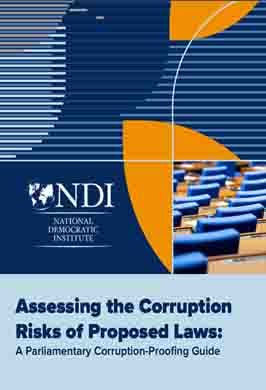
የረቂቅ ሕጋግትን የሙስና ተጋላጭነት መገምገም:ሕግጋትን ከሙስና መጠበቂያ መመሪያ: ለሕዝብ እንደራሴዎች
የተዘጋጀ
Corruption tends to get written into a law long before that law
is ever enforced, through vague language, unchecked discretion,
or provisions quietly shaped to benefit particular interests.
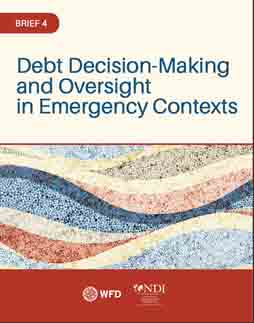
This toolkit from the National Democratic Institute (NDI) gives
lawmakers and parliamentary staff a way to catch those risks
while a bill is still being drafted, when there's still
time to fix them. It offers a structured framework for examining
legislation across its full lifecycle, drawing on international
experience with corruption risk analysis. The payoff is
legislation that is harder to bend toward private interests,
from a legislature that catches the openings for abuse while
they can still be closed.
BRIDGE's Role
BRIDGE serves as the programme's coordinating institution and
knowledge partner by:
-
Establishing partnerships with international organizations.
- Managing translation and quality assurance processes.
-
Coordinating contextual adaptation with national experts.
- Publishing and disseminating parliamentary resources.
- Designing and delivering capacity-building programmes.
-
Monitoring programme impact and documenting lessons learned.
Invitation to Collaborate
BRIDGE welcomes collaboration with parliamentary institutions,
international organizations, development partners, universities,
research centres, and governance practitioners who share our
commitment to strengthening democratic institutions through
accessible knowledge, innovation, and institutional capacity
development.
Together, we can build a stronger parliamentary knowledge
ecosystem that equips legislators with the information, tools,
and skills needed to promote accountable governance, effective
representation, and democratic resilience in Ethiopia and across
the Horn of Africa.